BHINDI / OKRA
A material research project exploring the agricultural residue as a potential alternative to synthetic material for industrial use.
MATERIAL (R)EVOLUTION
As global concerns about the environment continue to mount,
the pressing need for agro-based counter-parts is becoming more evident.
Recognising the complexity of this challenge, the project is a broad study in agro-waste sources, cultivation cycles, traditional processing methods, existing rural practices and material making. By tracing bhindi from field to fibre, the research examines whether such agricultural residues can evolve into viable raw materials for contemporary industrial and design applications.
-
Year | Location:
2019 | Gujarat, Maharashtra, Kerala
Research resources:
College of Agriculture, Pune — crop and cultivation context
Central Coir Research Institute, Kerala — raw material to product pathways
SASMIRA, Mumbai — fibre property testing
Pune Handmade Paper; State Khadi & Village Industries Board — paper development trials
Weavers Service Center, Mumbai — textile development trials
-
A research study tracing Bhindi (okra) from field to accessible and usable raw material.
The work mapped agro-waste availability, crop cycles, and existing rural practices.
It also tested basic extraction and material-making pathways through small prototypes.*This was an exploratory study, not a commercial product development project.
-
Traced and created a clear field-to-fibre map for okra residue as a potential raw material.
Brought together agricultural context, processing knowledge, and early material tests in one place.
Identified what looks promising—and what needs deeper research for scale and consistency. -
Secondary research
Field research & process mapping
Material experiments and prototyping
Documentation and evaluation
Comparative analysis (fibres, textures, strength, handling)
Communication of findings through visual/physical samples
-
Bio-based materials need systems thinking, not just material curiosity.
Availability, seasonality, processing effort, and variability shape feasibility as much as the material itself. Small prototypes are essential to test reality early.
A
MATERIAL
(R)EVOLUTION:
OKRA / BHINDI FIBERS
In recent years, many stem fibers such as flax, hemp and jute have been started to be used in place of synthetic material. Researches have begun to focus on agricultural plant stem wastes in fiber extraction because of their sustainable, recyclable, biodegradable and economical properties.
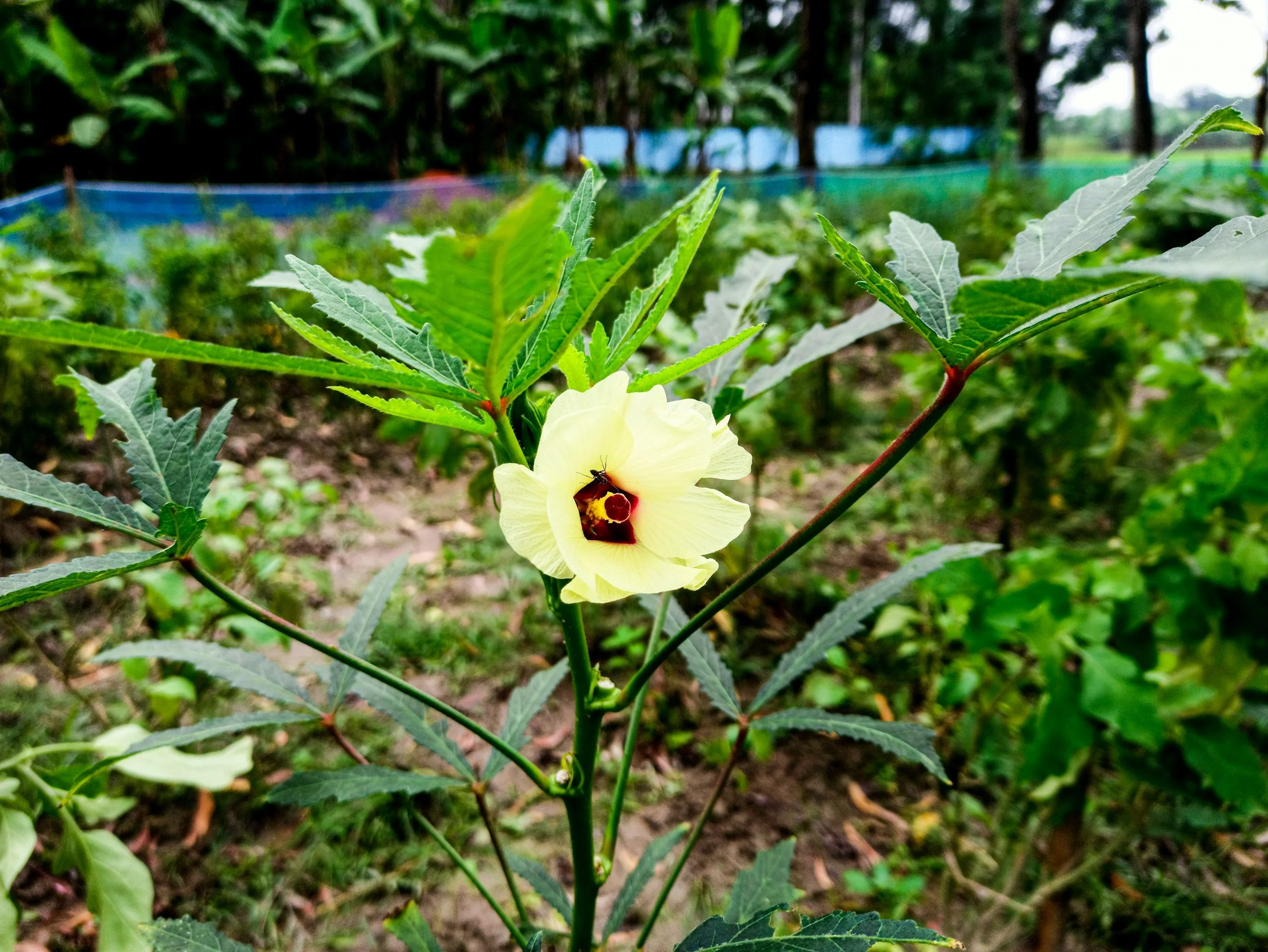
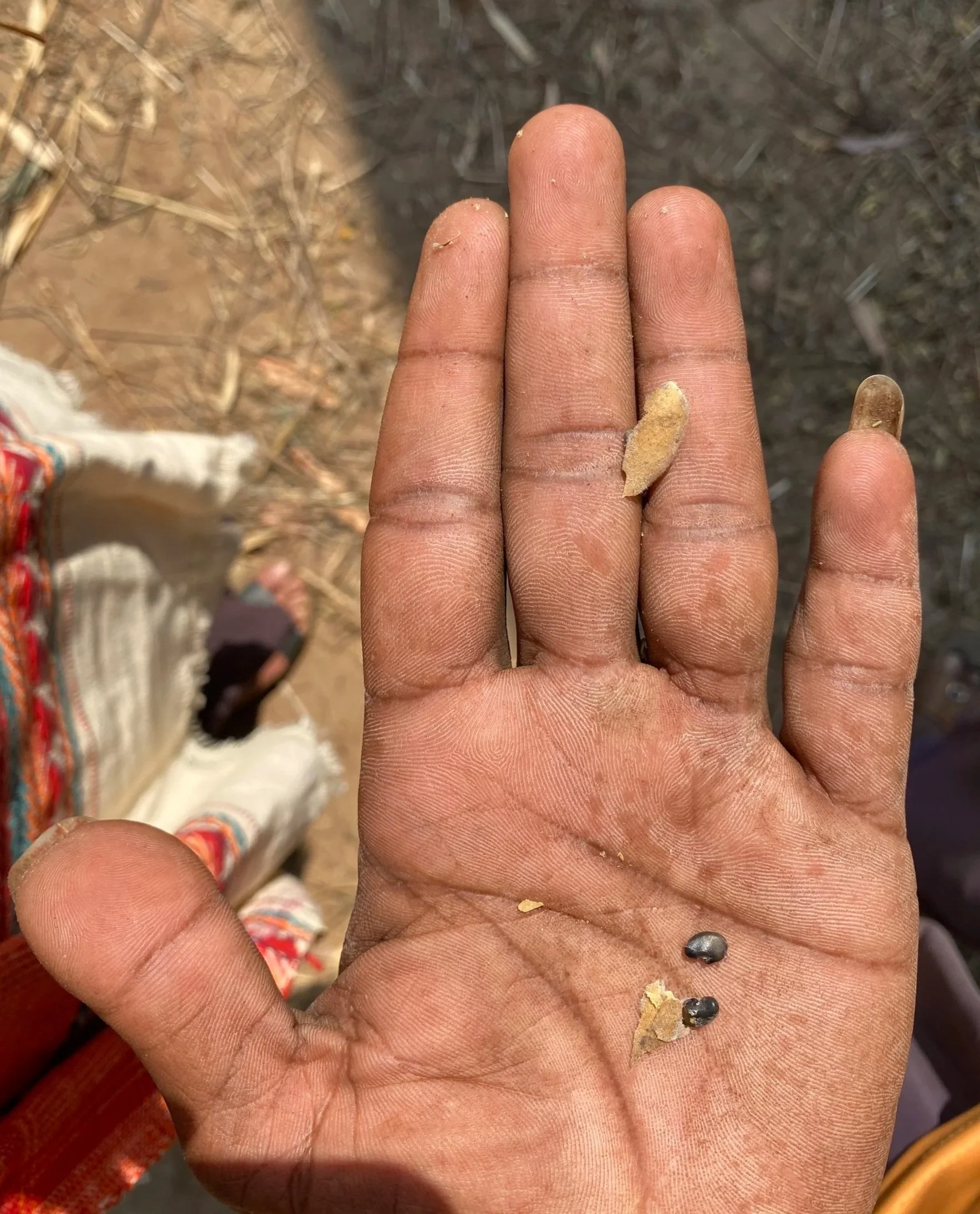
Okra is a common vegetable in India. Okra or Bhindi is an annual plant belongs to the family Malvaceae. It is mainly grown in tropical and sub-tropical regions. The major growing states in India are Uttar Pradesh, Bihar, West Bengal and Orissa. Okra is mainly grown for its green tender nutritive fruits. Okra is a rich source of vitamins, protein, calcium and other minerals.
Dry fruits and skin are useful in paper industry and fibre extraction.
THE CROP & FIBER EXTRACTION
OKRA / BHINDI
It is cultivated in rainy and spring season. In rainy season, it is sown during June-July and for spring season it is cultivated in January-February.
No of days for first harvest: 50-55
Yeild (kg/plant) : 0.100- 0.150
No of fruit per plant: 10-15
Weight of fruit (gms) : 10-15
Rainy season crop (quintal/ha) : 120 -150
Summer crop (quintal/ha) : 80 -100
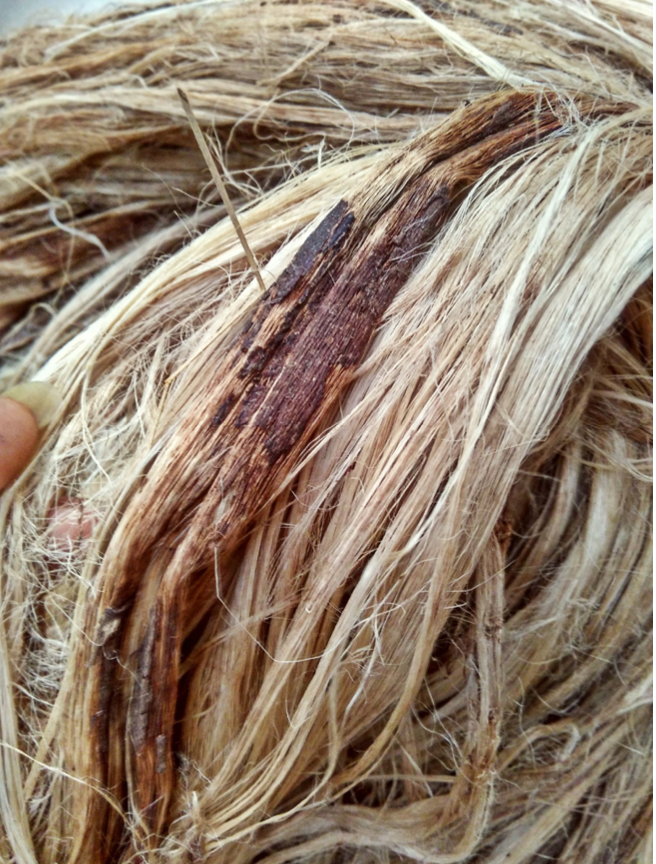
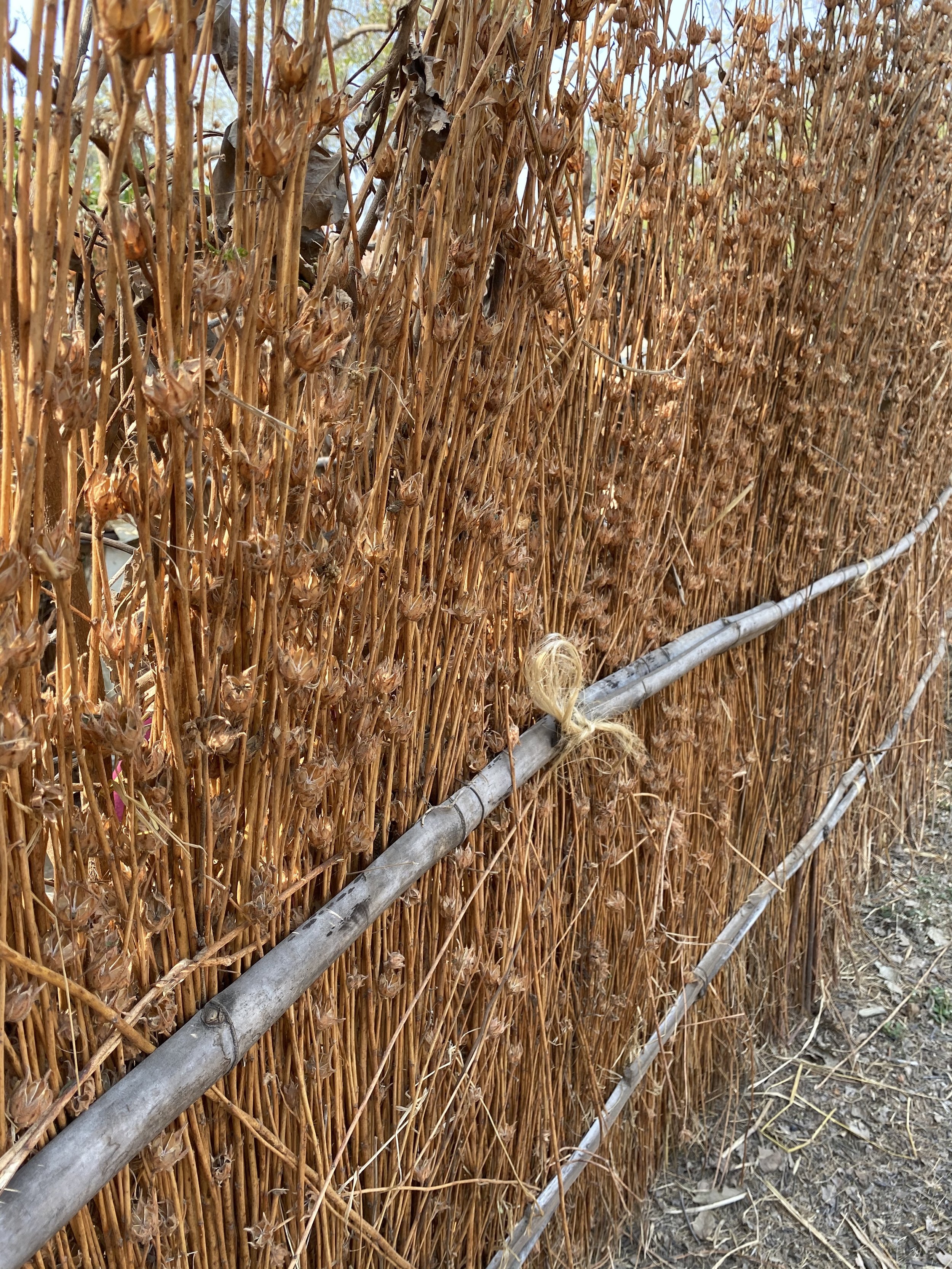
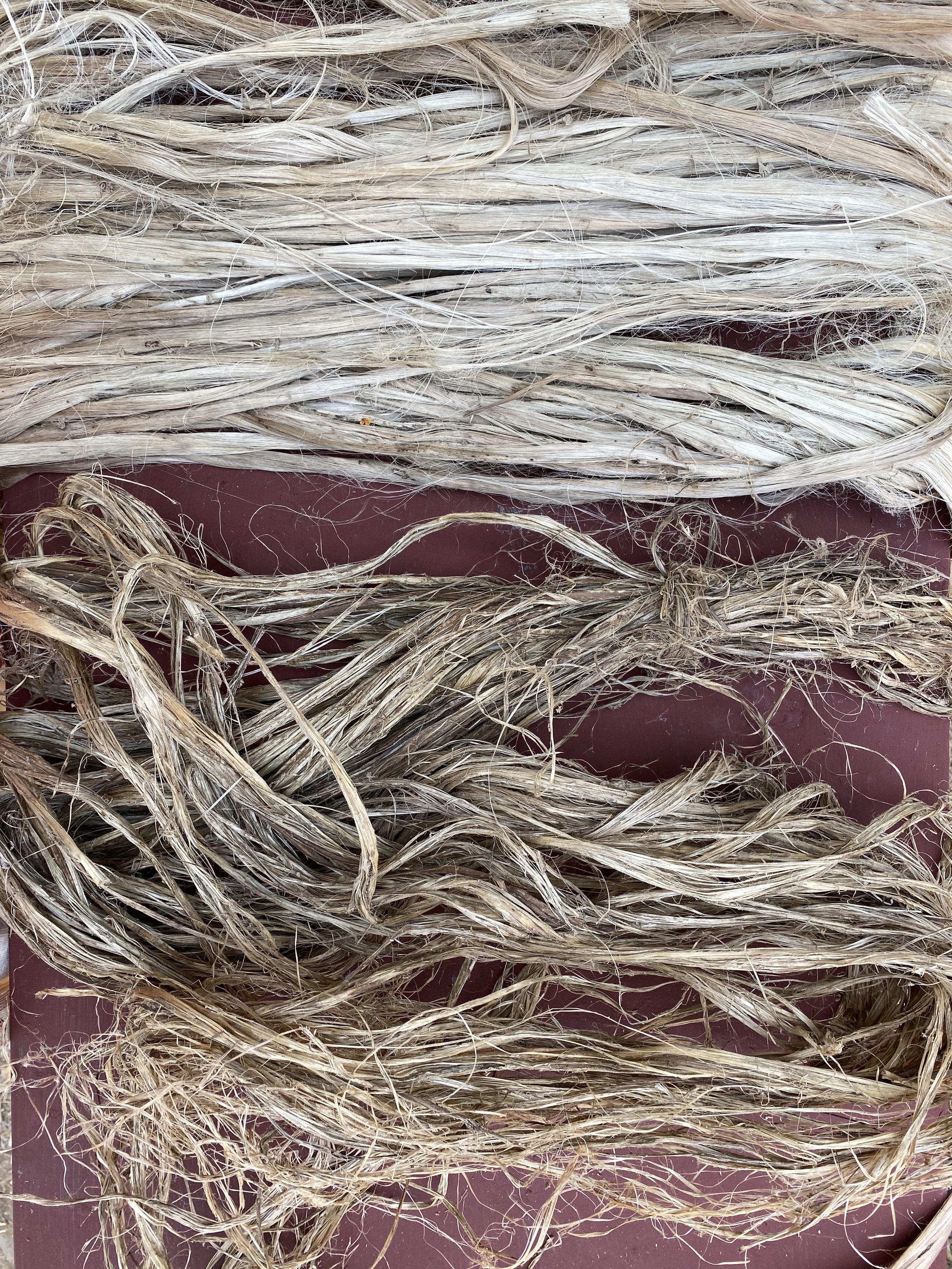
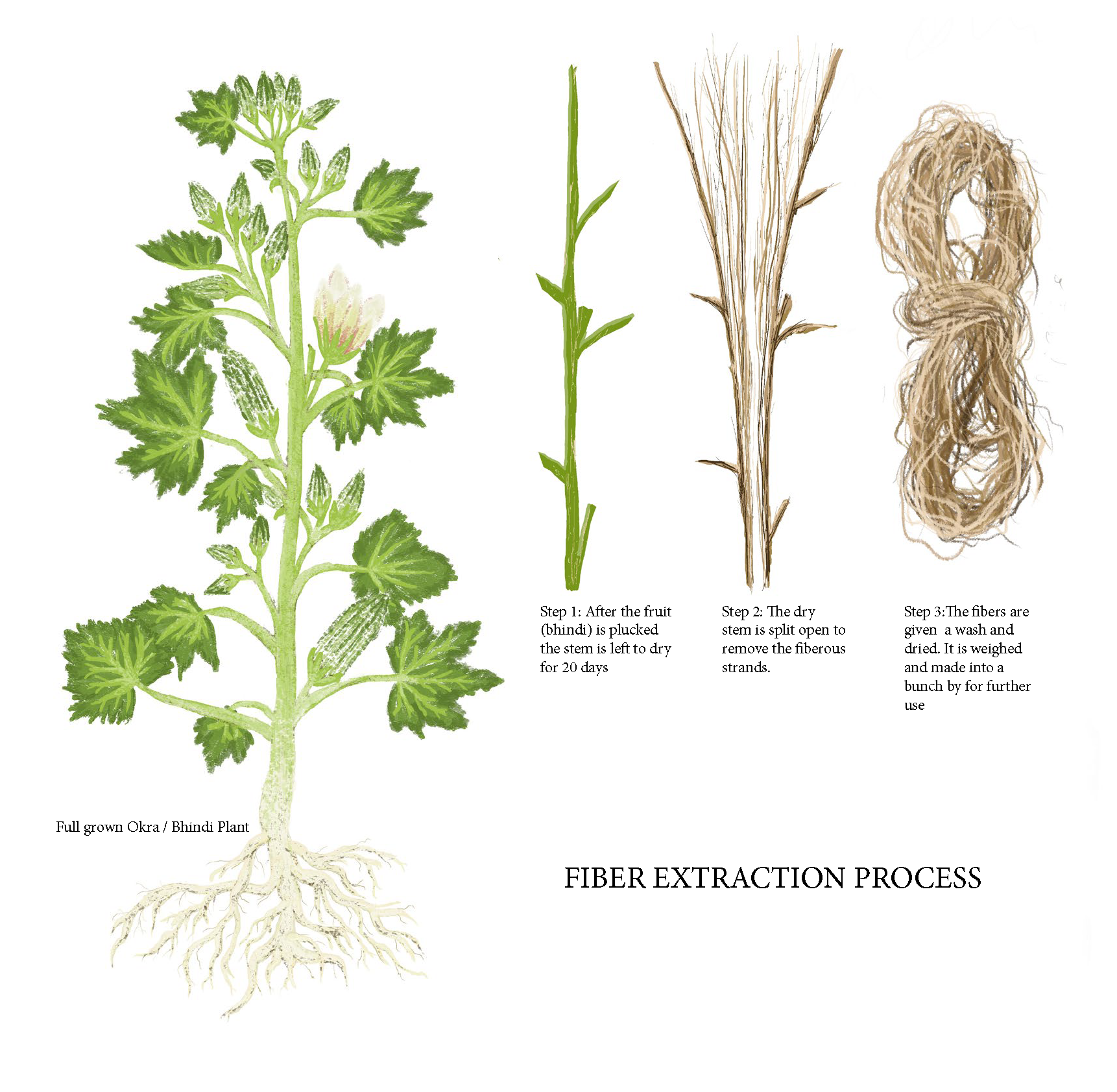
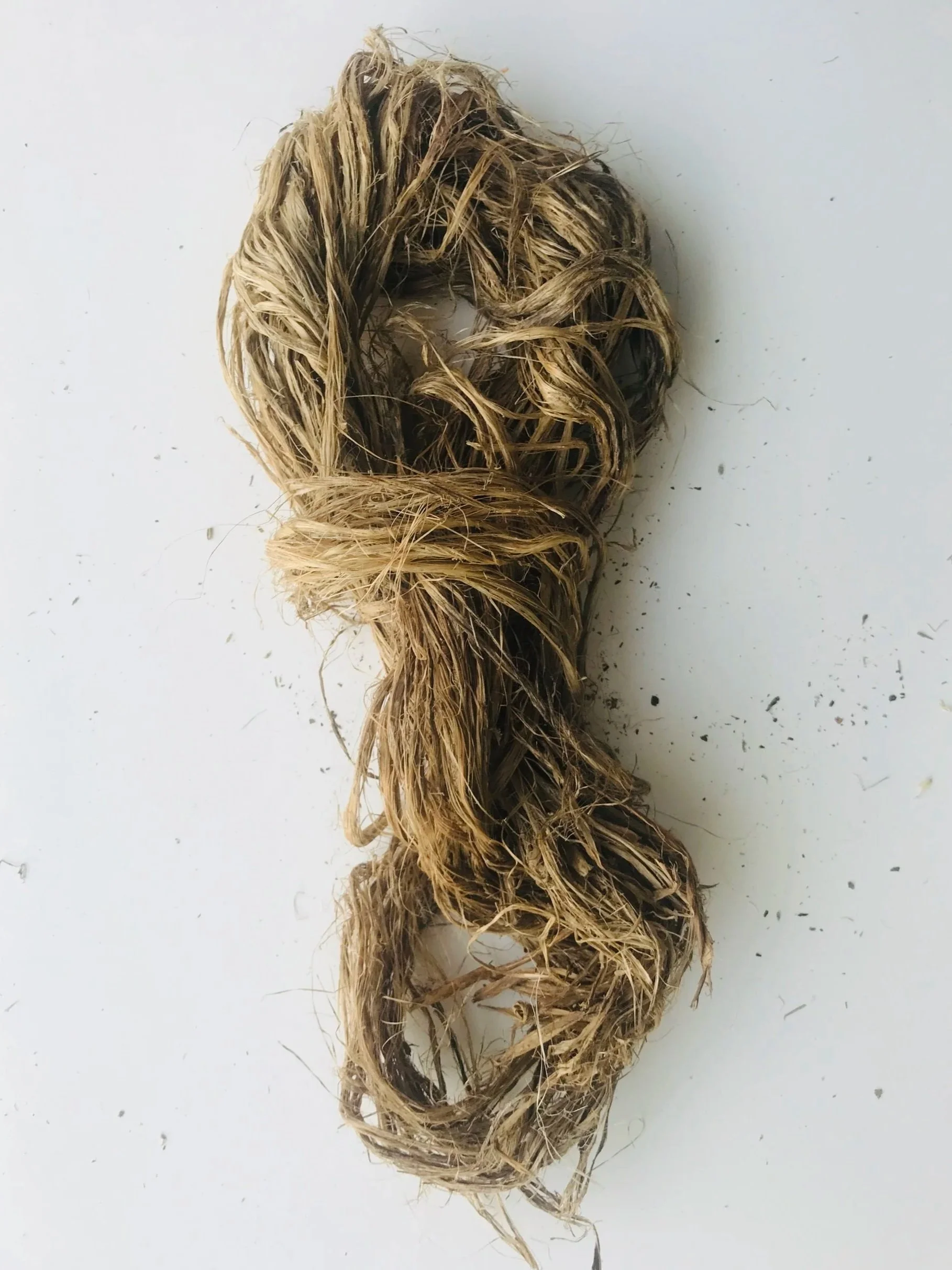
The okra fibers are obtained from the stem wastes of the okra plant remaining on the fields after harvest.

VERSATILE
DURABLE
TIMELESS
THE MAKING
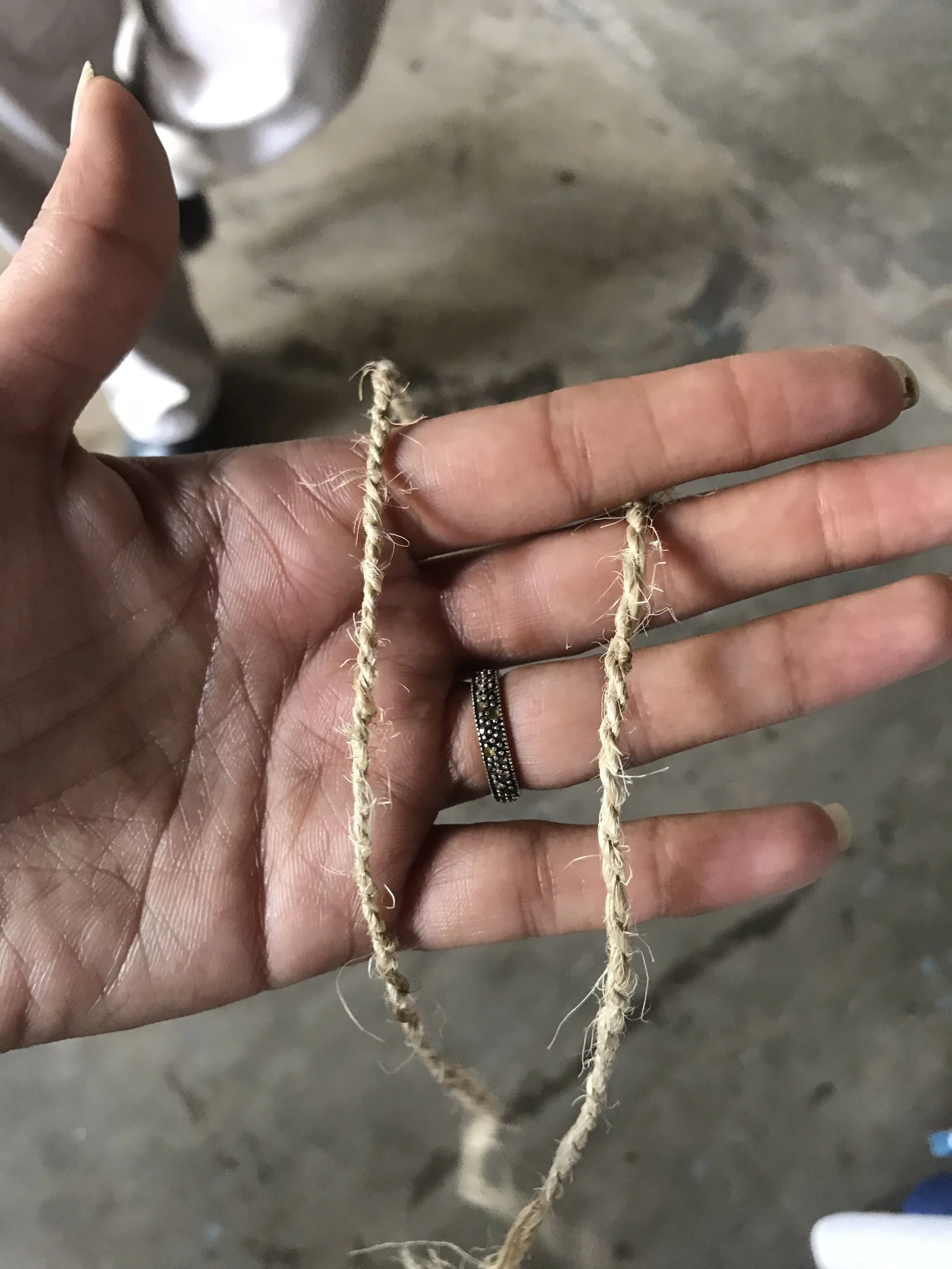
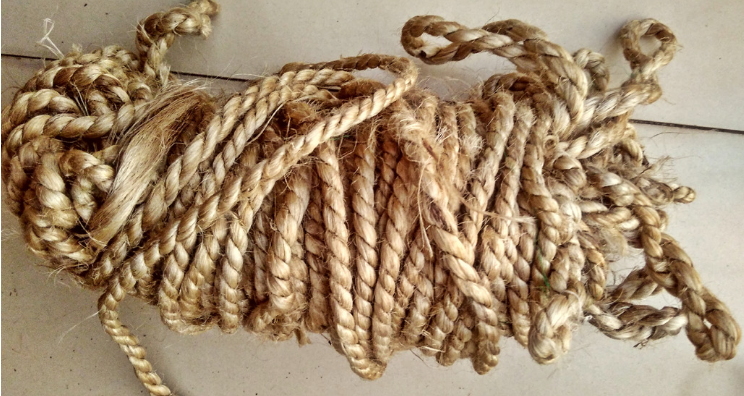
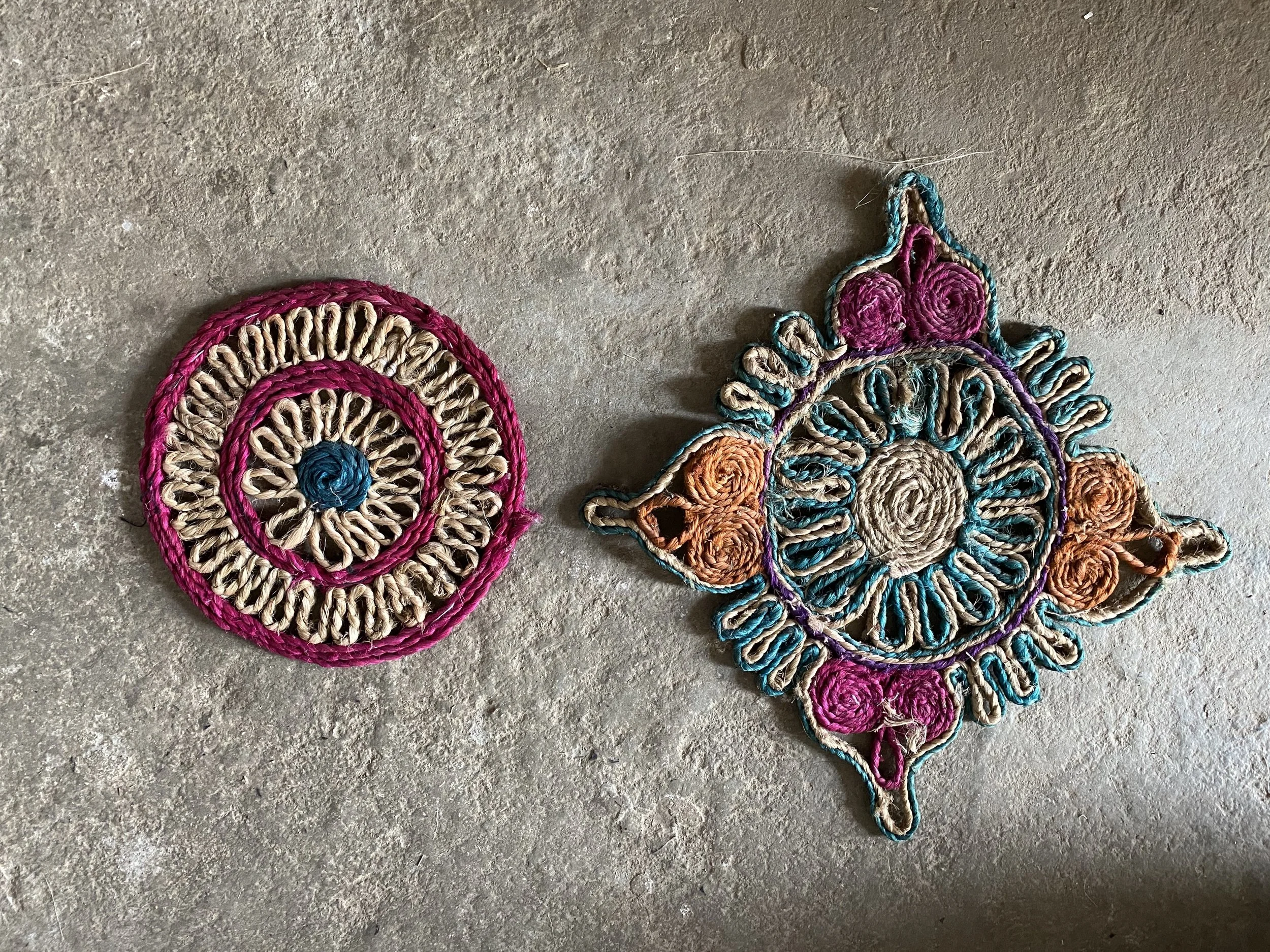
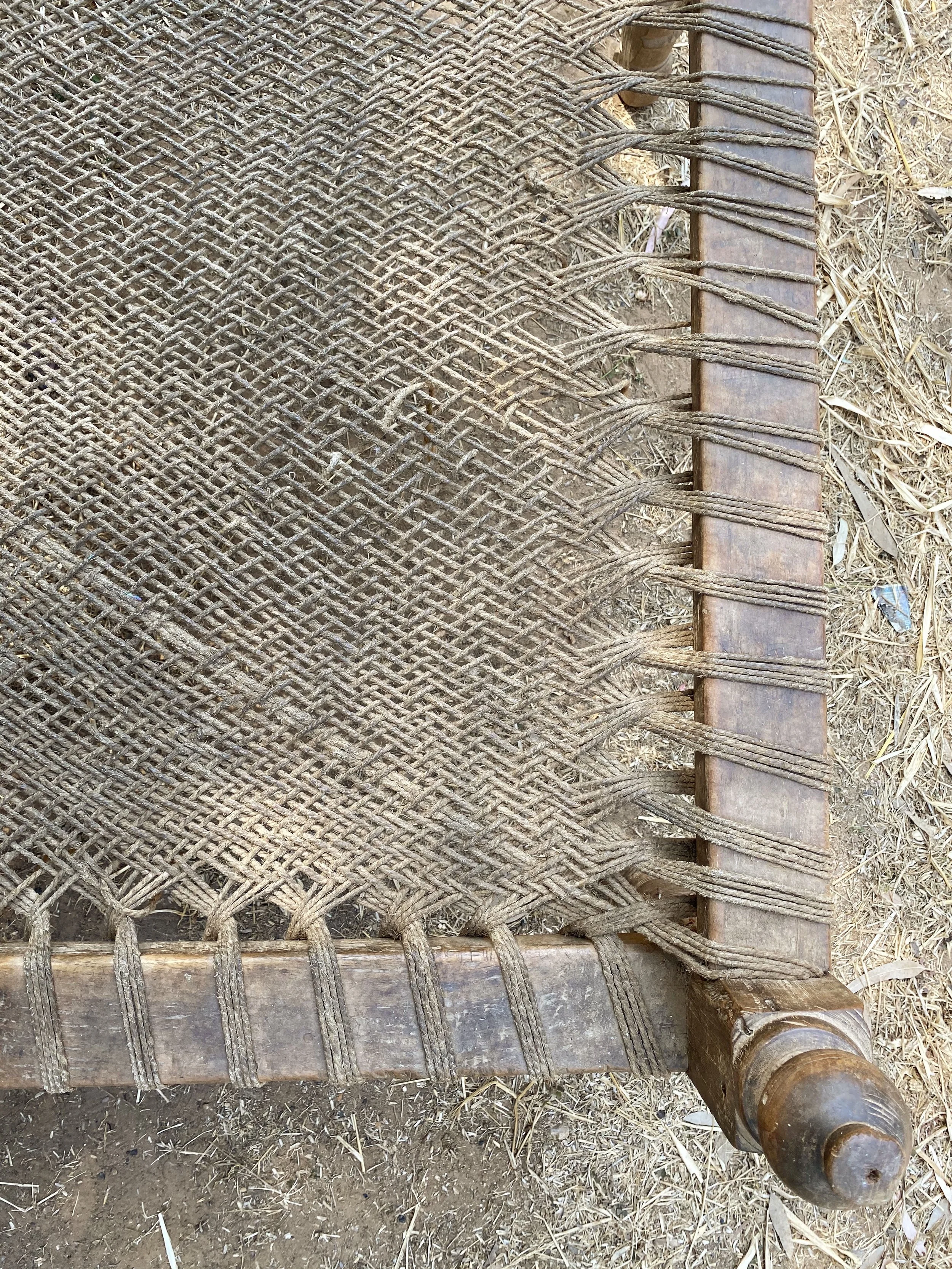
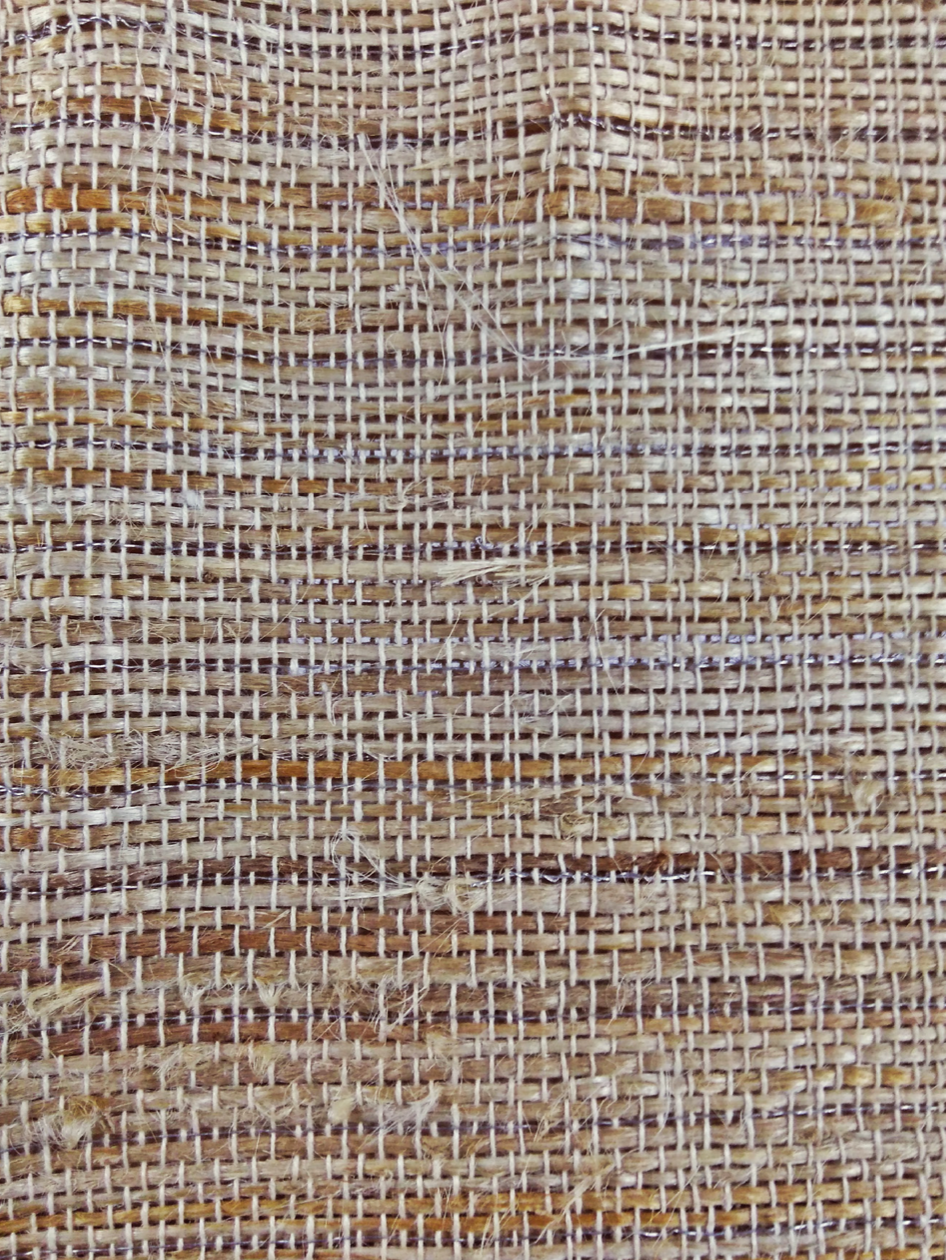
Bhindi fibers are separated and are braided into flat chunky ropes. The ropes made are often irregular in thickness and have small fibers popping out giving it a rough look. These ropes are thick with a diameter of 1.5cm to 2.5cm and are double plied.
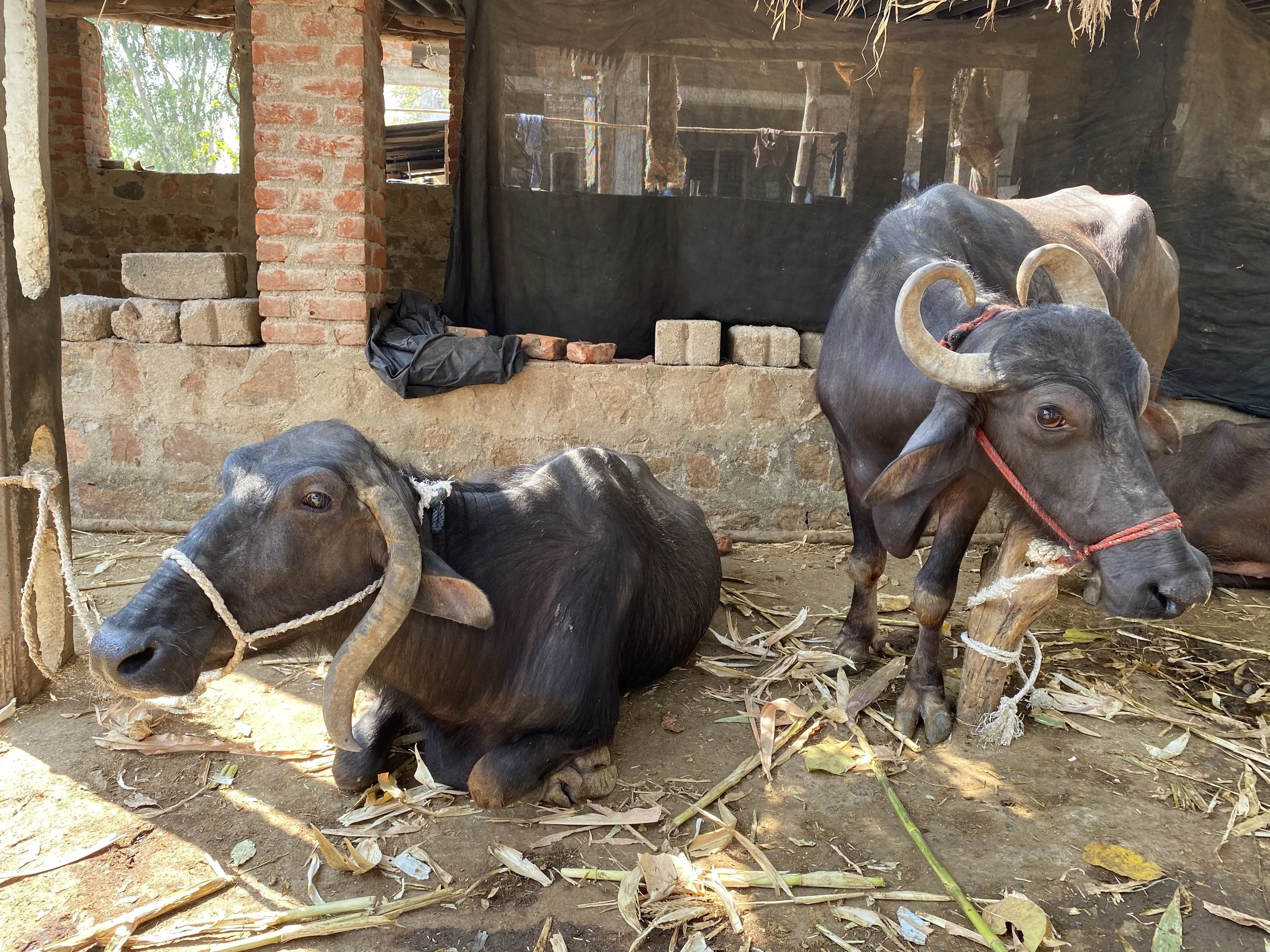
It is then used as a leash for farm animals. The carpai / cot are also woven using these Bhindi ropes. Many villagers in Gujarat use it for fencing as well.

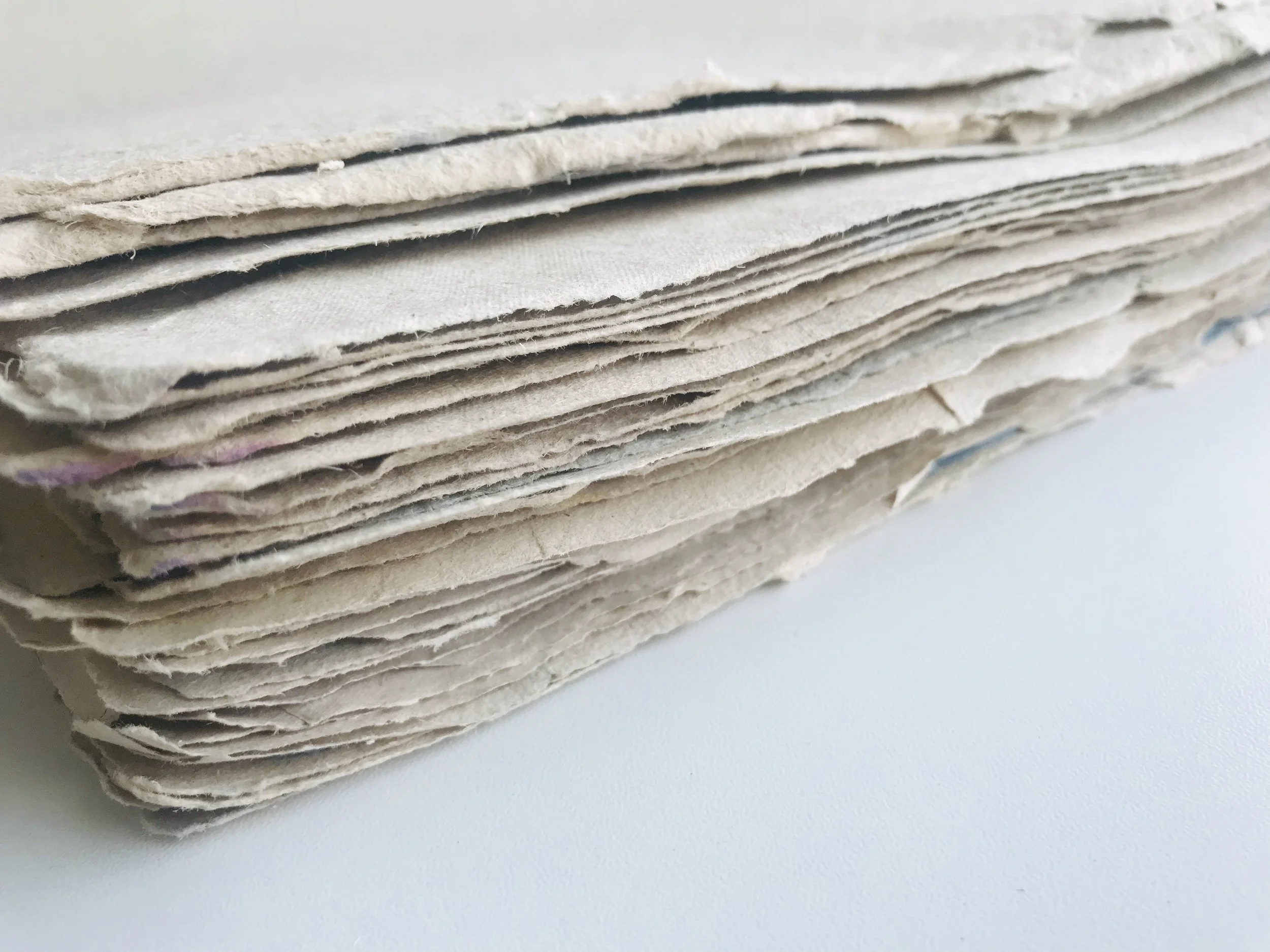
PAPER MAKING PROCESS
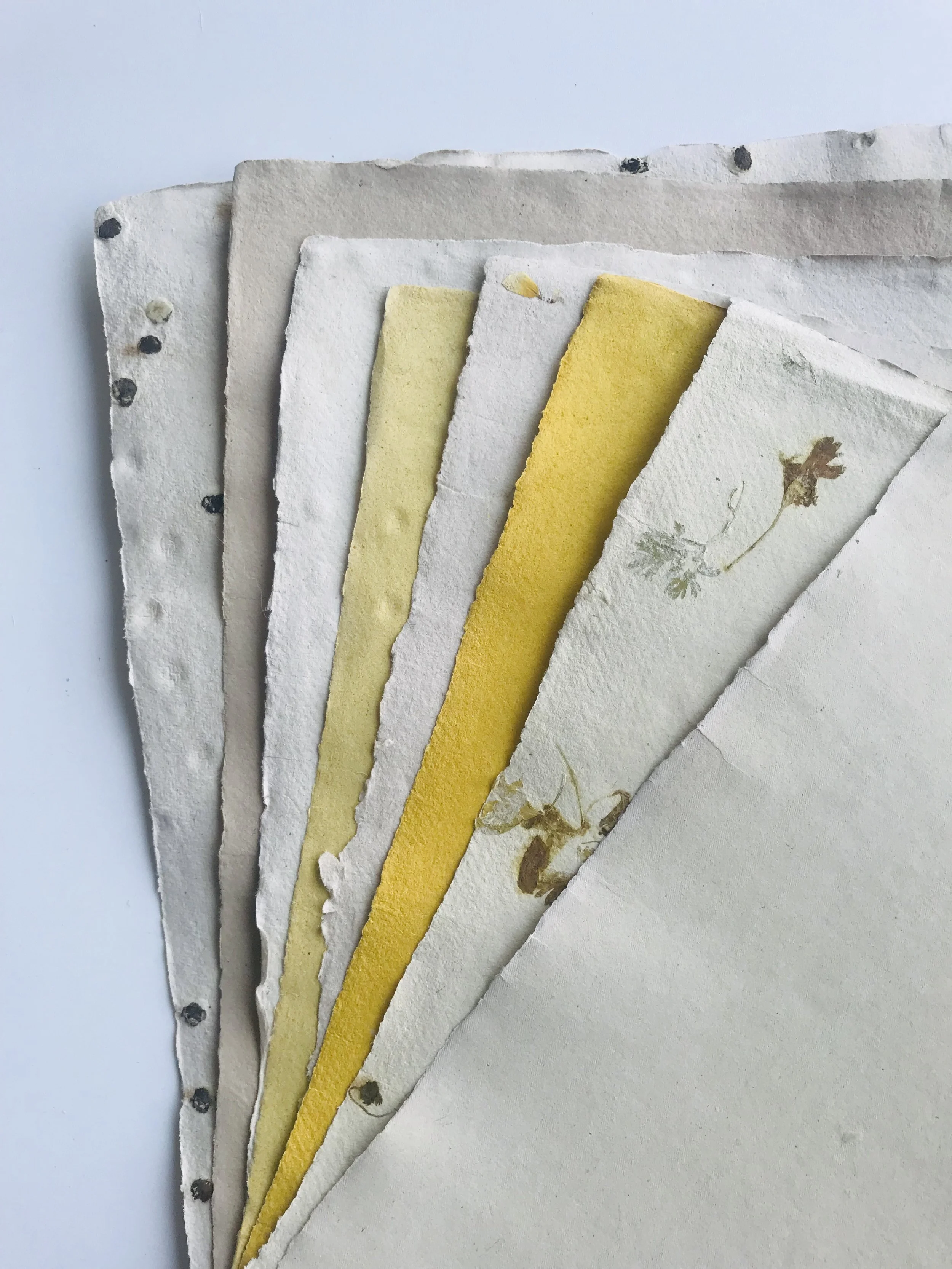
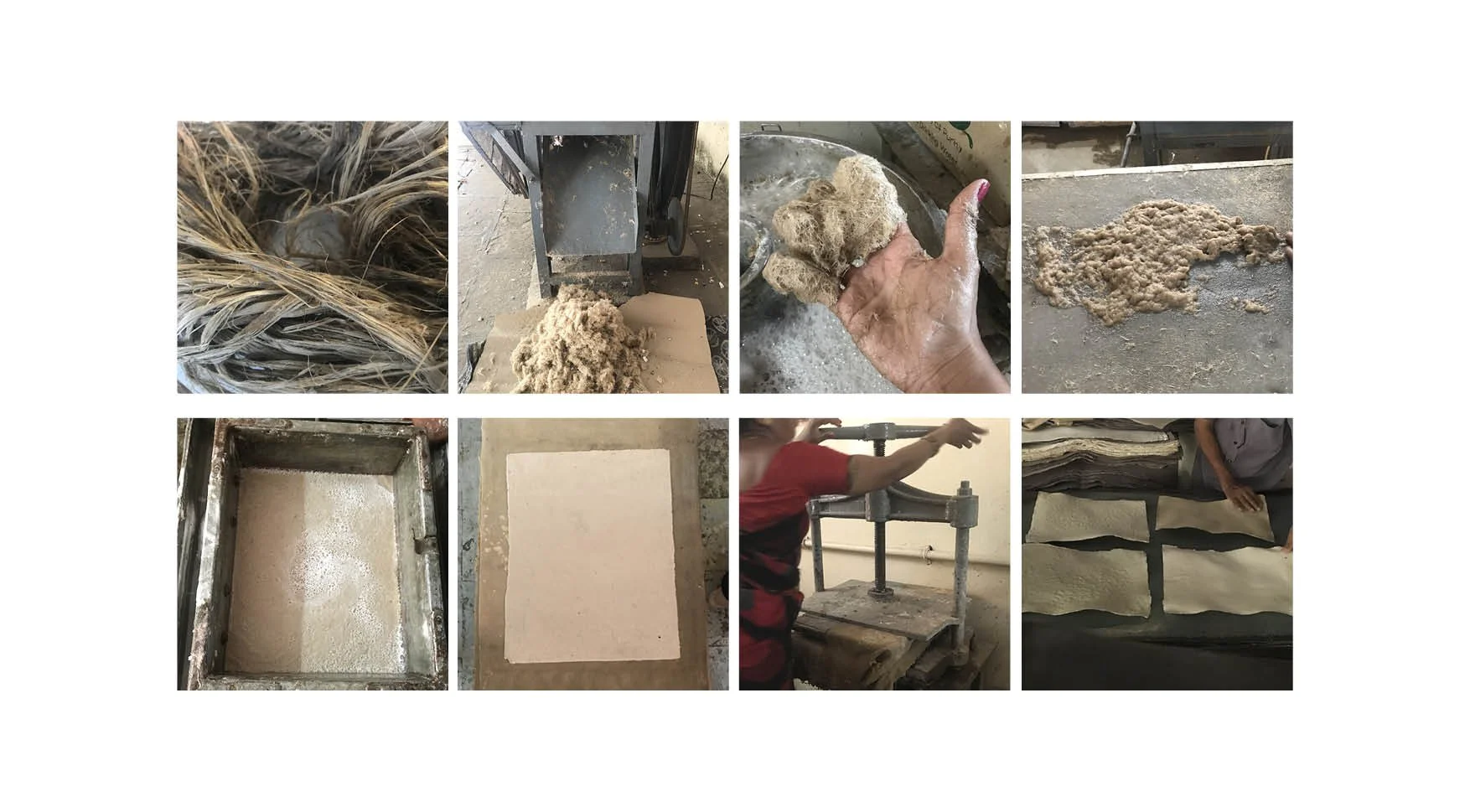
Handmade paper is a low-energy, small-scale craft process.
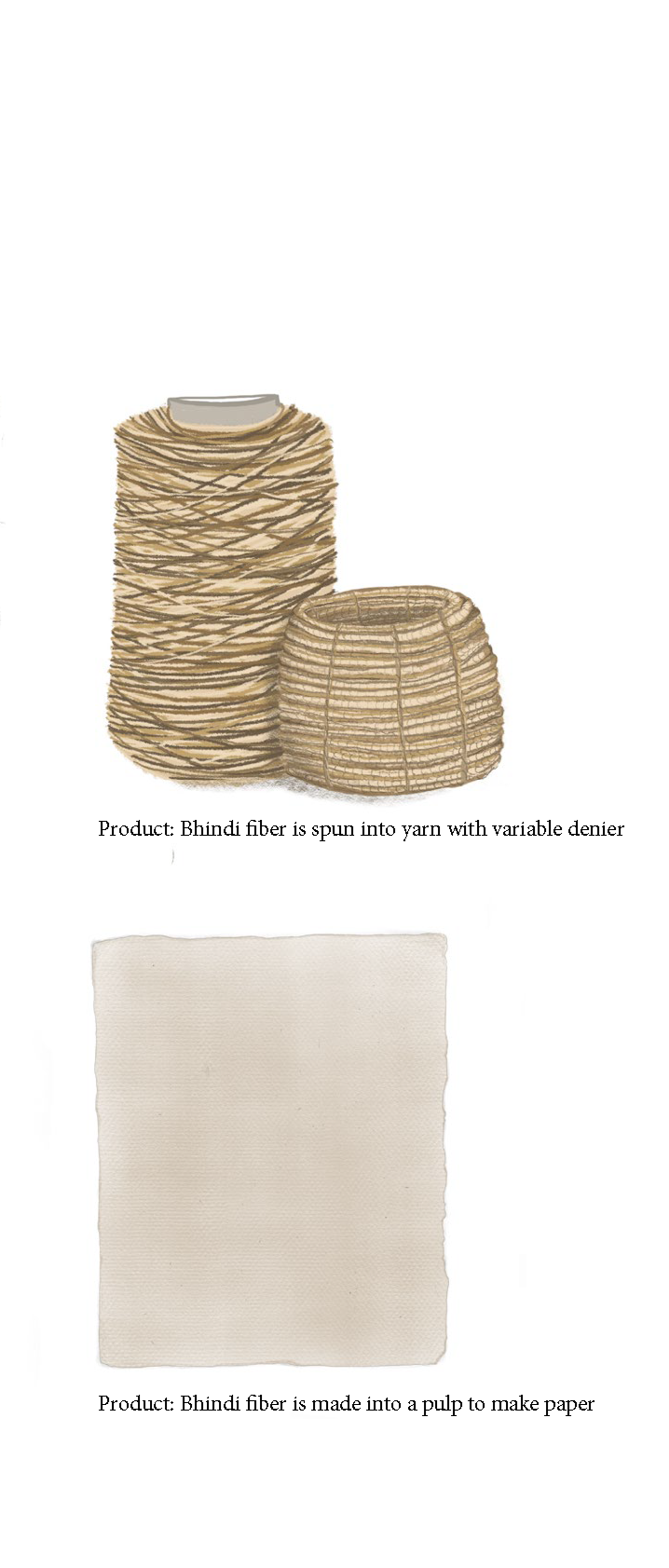
This exploration tests a blended pulp made from bhindi (okra) stem fibre and cotton rag. Okra fibre comes from the stem residue left after harvest. Cotton rag adds strength and familiarity to the handmade paper system.
Fibre sourcing
Cleaning + preparation
Pulping
Sheet formation
Pressing + drying
Finishing
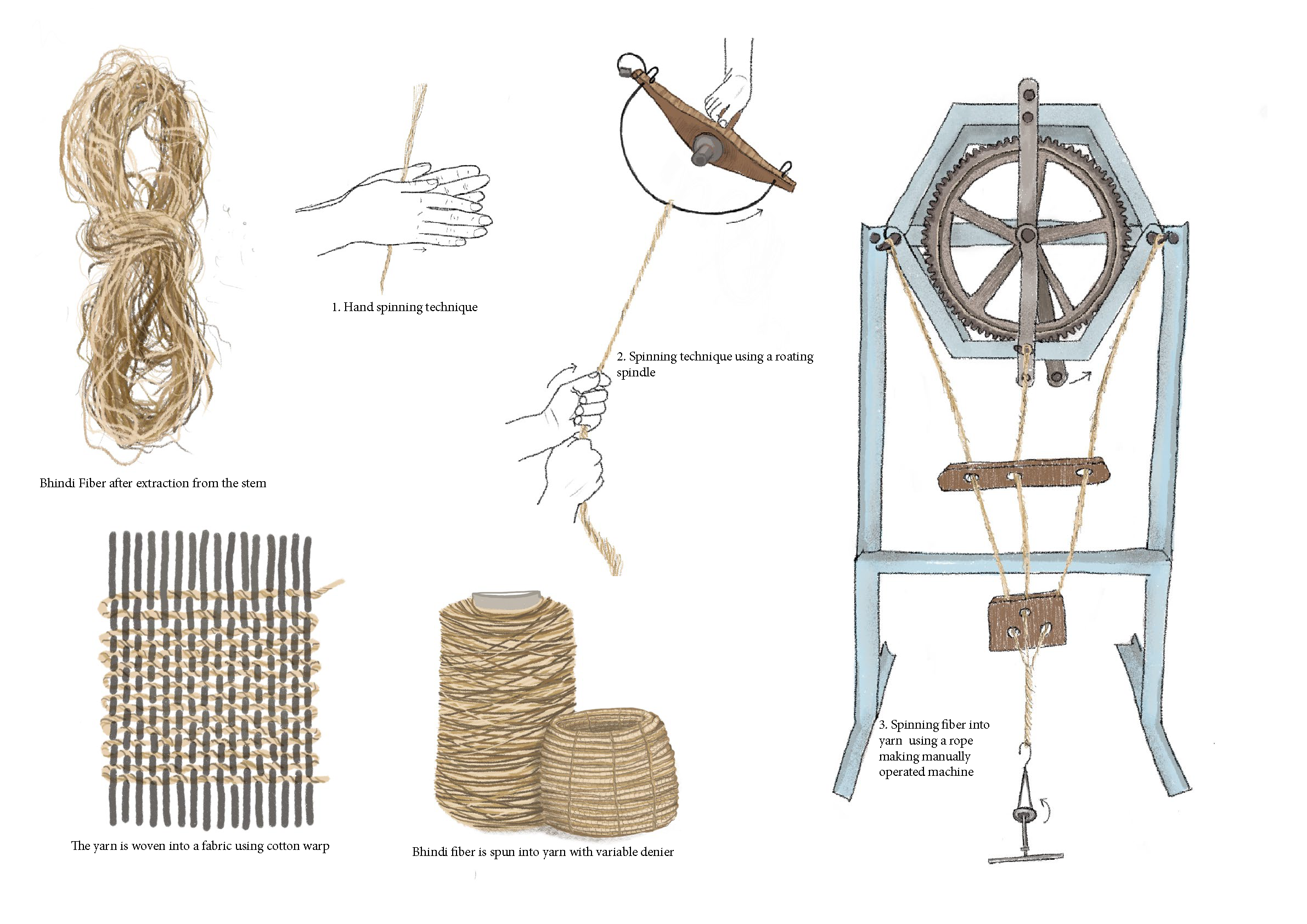
YARN MAKING
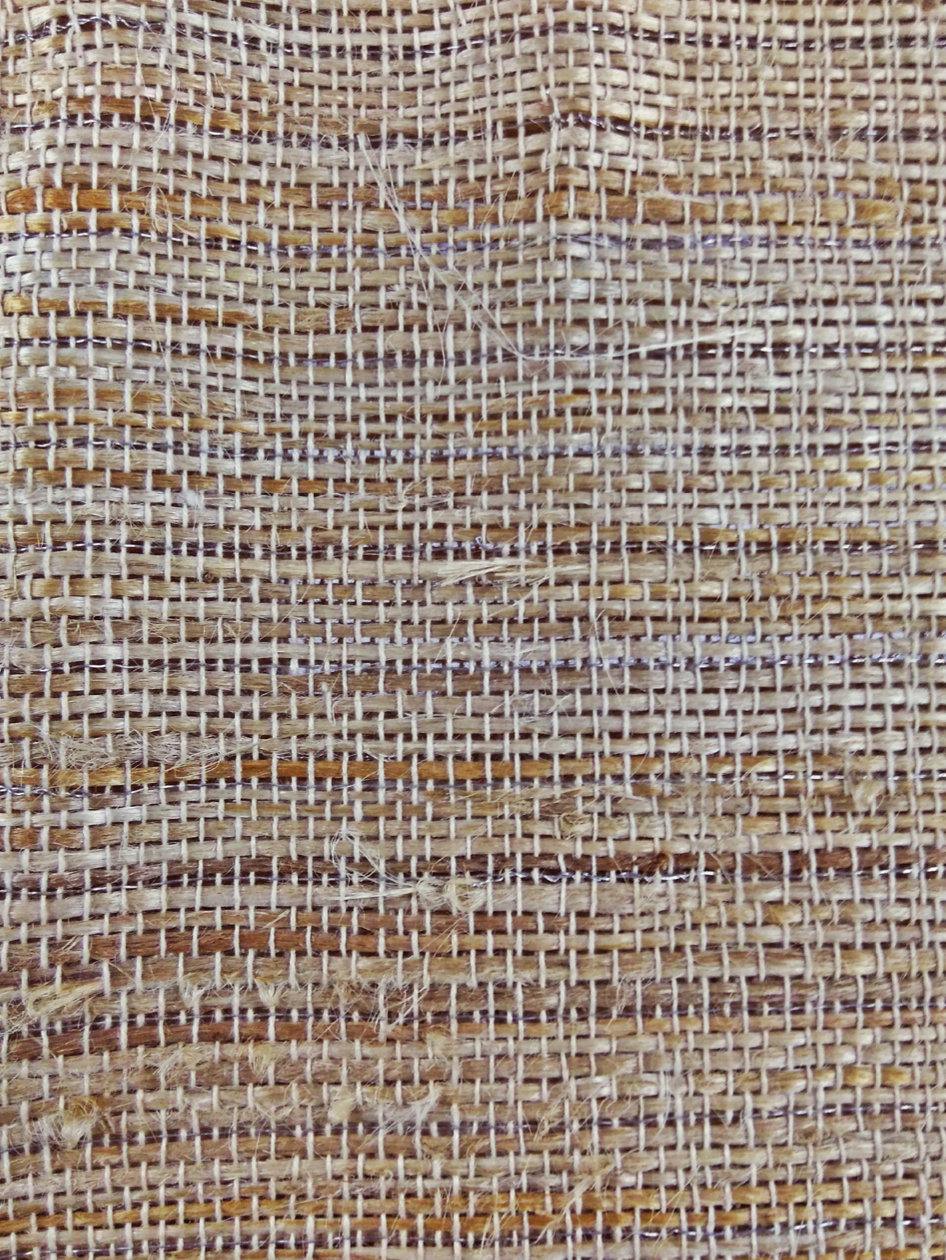
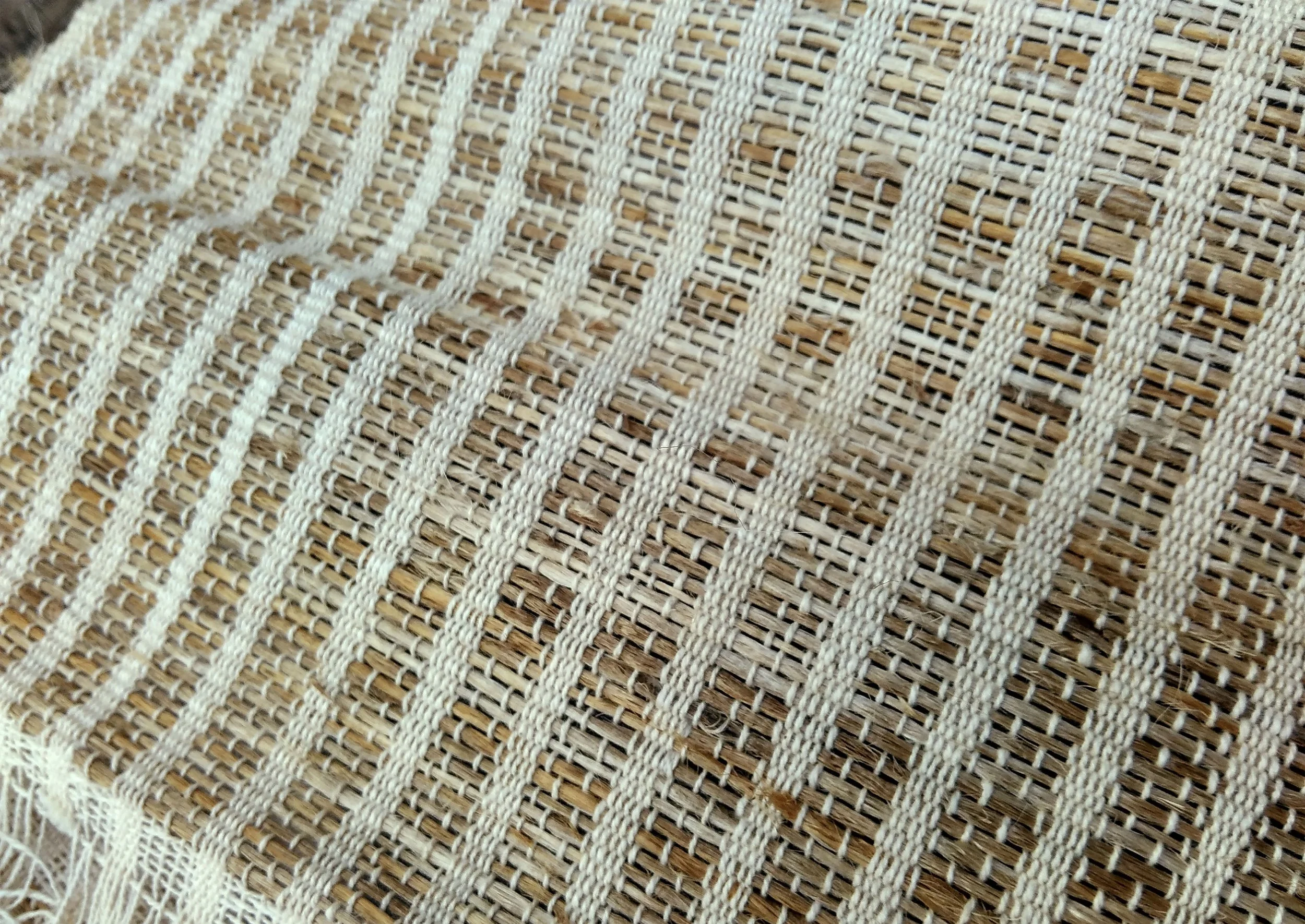
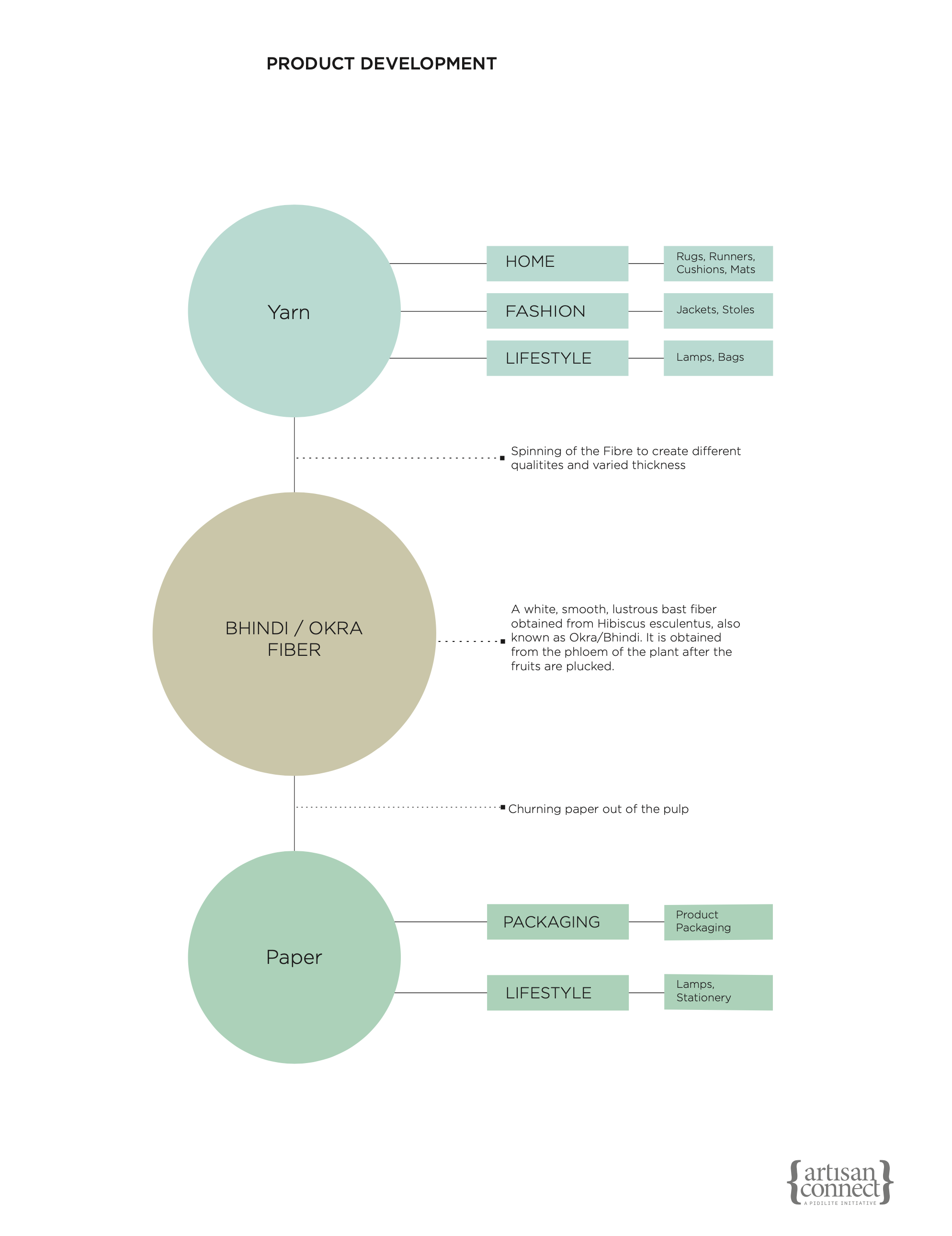
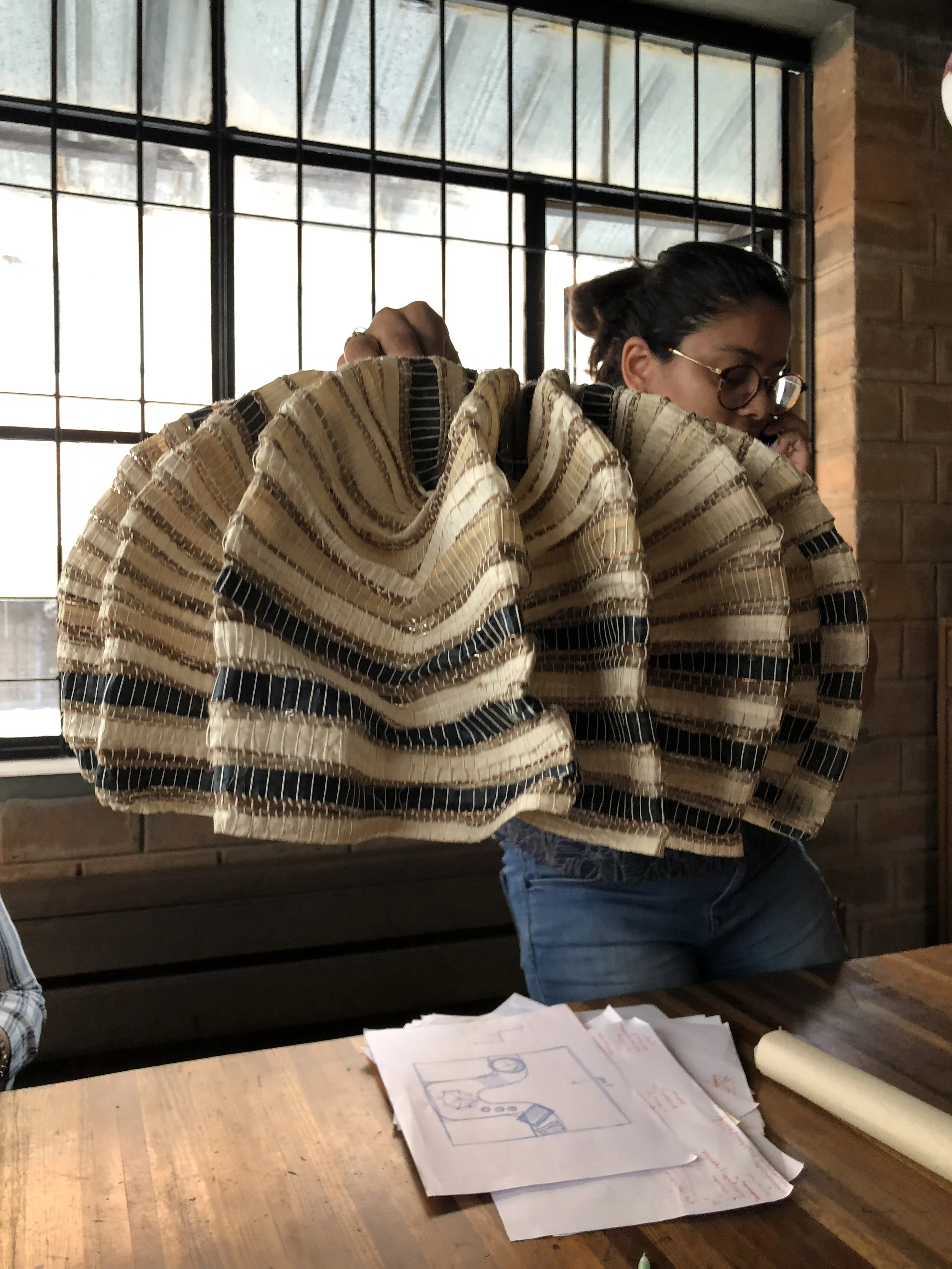
Bhindi (okra) stem residue can be opened into fibre for yarn-making and weaving.
This exploration studies whether an agricultural by-product can be processed into a usable (spun) fibre for weaving.
Process (Bhindi Fibre to Yarn)
Fibre sourcing
Fibre extraction + cleaning
Fibre opening
Blending (optional)
Carding / alignment
Spinning trials
Plying